July 6, 2026
Drought Management With Soil Health in Mind
By Bryan Jorgensen - Visionary, Ideal Soil Solutions
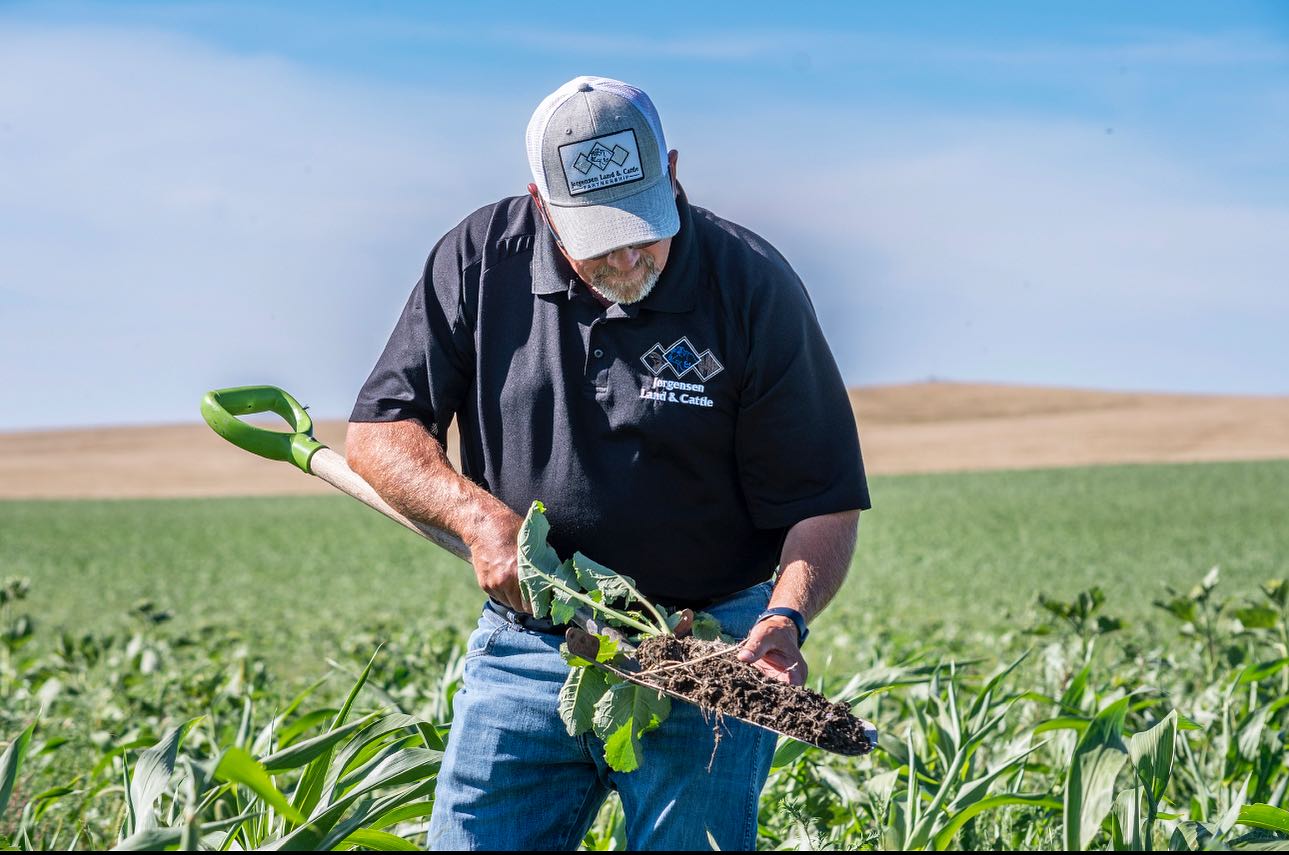
I've been farming for a little over forty-one years, and this spring I did something I've never had to do before: I abandoned roughly 800 acres of winter wheat, planting oats over the top just to salvage something for grazing. A year ago we lost a little wheat, but we didn't abandon acres. This year is different. Looking at the drought index, we're sitting on the western edge of an extreme drought scenario that stretches from central South Dakota down through western Nebraska, Kansas, Oklahoma, and into Texas. That's a lot of cow country.
The only time in my life I've seen it worse was 1976. I was eleven years old. We barely put up any feed, harvested almost no grain, and shipped our cows to the Black Hills, where we lost about two-thirds of the herd to pine needle abortion. We haven't seen dryness like today's since. So when people ask me to define drought, I tell them: it's not just a number on a chart. It's a pattern. Our precipitation over the last few years has averaged out near normal, but it's arriving at the wrong times, in the wrong amounts, with almost no winter snowpack to recharge the system come spring. Add in stretches of hot, dry, low-humidity wind, and you've pulled every bit of reserve moisture out of the soil.
Here's what I want producers to take from this: rainfall is still the silver bullet. No management system replaces water. But how you've managed your soil before the drought hits determines how much time you buy yourself, and how fast your ground bounces back when the rain finally comes. That's the whole conversation.
Building the Plan Before You Need It
Our drought plan didn't start this spring...it started last fall. By September, with winter wheat prices near $4, we were already penciling out grazing more wheat acres instead of harvesting them. We started building extra hay inventory before prices ran up, adding somewhere between 1,500 and 2,000 tons beyond what we'd normally put up. It wasn't enough, but it kept us ahead of $230-$240-a-ton grass hay.
We held cows off pasture longer than usual this spring to give our rangeland a chance to recover, using the abandoned wheat and oat acres to bridge that gap instead. We clipped damaged alfalfa to remove frost-burned material rather than let it sit. None of this is glamorous. It's just the discipline of thinking two steps ahead instead of reacting. The Five Soil Health Principles don't change, even in a drought.
This is where I always start, because these principles apply whether you're running an intensive cropping operation or managing native prairie. They won't make it rain. But they determine how your ground responds to every drop you do get.
1. Protect the armor. Residue on the soil surface is a quilt. It moderates temperature swings: bare black soil can hit 140–150 degrees on a 90-degree day, and biology below the surface struggles above about 118 degrees. That residue also slows evaporation and lets rainfall soak in like a sponge instead of running off or dispersing clay particles on bare ground. Minimizing tillage and never overgrazing pasture below three to four inches of cover protects that armor.
2. Minimize disturbance. Tillage is a disturbance...I'd call it a nuclear event in the soil. It oxidizes residue, burns through biological fuel reserves, and exposes soil to moisture loss. But disturbance isn't only tillage. Compaction from overgrazing or heavy equipment, excess fertilizer, and unnecessary herbicide or fungicide inputs all count. Ripping compacted ground is a short-term band-aid for a long-term problem: it's expensive, and if you rip when it's wet, you compact it further. Organic matter is your real defense here. Above about 3% organic matter, soil behaves like a sponge and rebounds from compaction. Below that, you're in trouble.
3. Keep a living root. This one matters more than people think, even outside of drought. A living root feeds the biological community around it through photosynthesis. Sunlight becomes sugars, sugars feed the root, the root feeds the biome. When that root dies and nothing replaces it, that's the start of desertification. In an annual cropping system, the gap between harvest and next planting is exactly where we lose ground. That's why we push cover crops immediately behind wheat or silage, not just for later grazing value, but to keep something alive in the soil scavenging nutrients and building carbon.
4. Build diversity. Nature never grows one species alone. A native prairie carries diverse warm- and cool-season grasses, legumes, and forbs, all supporting different biology at different times. A monoculture crop supports one root system and one biological community, and then it's done. Diverse cover crop blends (sudangrass, forage sorghum, oats, brassicas, clovers) extend that living-root window and open up grazing opportunity.
5. Integrate livestock. This is the principle I'd call magical. A well-managed, livestock-integrated prairie system is self-sustaining...no added fertilizer, no spraying, because it's balanced. Bringing that concept to cropland works the same way, as long as it's managed properly. Cattle build organic matter fast. There's also a signal effect: when an animal grazes the top of a plant, it triggers the plant to send more energy to root growth, branching out for more water and nutrients. Graze it right, and it comes back stronger.
On the Cropping Side
If you haven't planted anything yet and you're trying to salvage forage value, don't overthink it. At minimum, get a sudangrass or forage sorghum blend in the ground. Warm-season grasses are drought tolerant and will do something even on limited moisture. Mix in oats, forage barley, brassicas, whatever you've got. Don't spend heavily on fertility unless the ground is truly void of it; foliar feeding can carry a crop through the rough patches. And one caution: drought-stressed forage concentrates nutrients, including nitrates, toward the base of the plant. Test before you turn cattle out. It's not worth a wreck.
Letting ground sit fallow because "it's too dry to bother" is the wrong move. No root means no biology, and that's the fast track to desertification. You're betting that moisture eventually comes, and it will, so you want a root system in place and ready when it does.
On the Rangeland Side
The same principles apply, with a few specifics. If your rangeland has already been abused (overgrazed to the point it looks bare from half a mile away) don't put cattle on it this year. Let it rest.
If you've been managing well, this is where rotational intensity pays off. We've doubled our carrying capacity over the years, from about eight acres per cow-calf pair down to four or less, through tighter grazing intervals using virtual fencing collars. In drought conditions, we're moving cattle daily or every other day, keeping paddocks small and concentrated the way bison historically grazed: hit an area hard, move on, don't come back too soon. Whether you're using collars, polywire, or good cross-fencing, the principle is the same. Never take perennial grass below three to four inches of residual...going lower delays root regrowth significantly, because the plant has to spend more energy just getting leaf back up to capture sunlight before it can rebuild roots. Water access is usually your limiting factor, so plan paddock movement around it, and keep protein supplementation available for cattle grazing high-fiber, drought-stressed forage.
Managing the Cow Herd Through It
A few practical moves worth considering: early weaning can cut a cow's nutritional demand by roughly 20%, which matters enormously in a tight feed year and helps her rebreed. Limit-feeding cows in a dry lot, especially post-peak-lactation, can be a cost-effective bridge - distillers grains are proving valuable here. None of this is about giving up on your genetics or your herd. It's about getting creative and thinking past the traditional combine-and-semi mindset. There's real market value in grazing failed crop acres rather than simply taking a crop insurance check and walking away. Pasture rent alone is running $60-$90 an acre on a cow-calf pair right now.
The Bottom Line
If you take rangeland or cropland down to nothing during a drought, you'll pay for it for years: brome grass, thistles, unwanted species moving in where the good stuff used to be. The small disciplined decisions you make today, especially the ones that feel painful in the short term, are what protect your ground's ability to bounce back big when the rain finally returns.
That's really the whole point behind Ideal Soil Solutions. We're not selling a program built around squeezing out another 10 or 20 bushels an acre. We're focused on the soil system itself (the biology, the chemistry, the physical structure) because a resilient soil system is what gets you through years like this one with the least damage and the fastest recovery. Preserving that resource isn't optional. It's the only soil we've got, and it's the one we're handing to the next generation.
If you want to talk through what these principles look like on your own operation, that's exactly the conversation we want to have. Visit idealsoilsolutions.com to learn more about the five soil health principles and how we can help you build a more resilient, more profitable system...drought or no drought.