September 25, 2026
How Many Days Does Your Field Have a Living Root?
By Bryan Jorgensen, Visionary - Ideal Soil Solutions
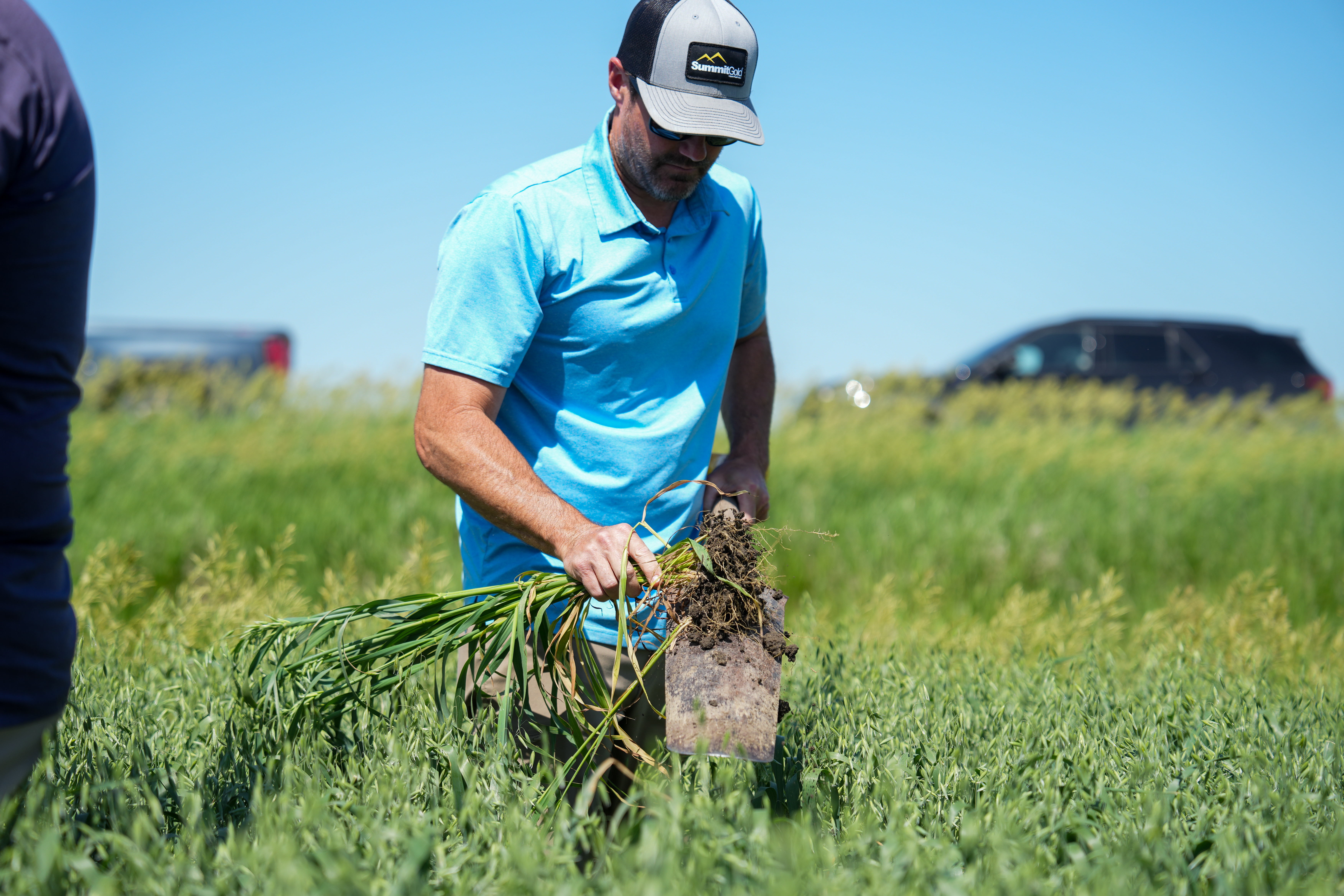
Every fall, once the combines start rolling, I ask a simple question about every field we farm: how many days of the year did this ground have a living root in it?
It sounds basic, but it tells you more about where that soil is headed than almost any test you can run.
Why the count matters
A root doesn't just hold the plant in place and pull up water and nutrients. It pushes out into the soil as far as it can reach. It trades the plant's sugars for nutrients, and it gives the microbes that make that trade possible a place to live. Every day that root is working, the system is building. Every day it isn't, the microbes go looking for something else to eat, and usually that means your organic matter.
Keep that root working longer and the soil gets livelier and healthier. Cut it short and you're drawing down the account instead of adding to it.
Count them honestly
Counting honestly means you don't start on planting day and you don't stop at harvest. A seed in the ground isn't a living root. A crop standing dry in the field waiting on the combine isn't one either. You count from emergence to maturity, when that plant is actually green, growing, and feeding the soil.
Run that math on a typical corn and soybean rotation and most fields land around 150 days. That's mid-May to the end of September, give or take a couple weeks depending on where you farm.
That leaves 215 days where nothing is trading, nothing is building, and the biology in that ground is getting by on reserves.
Where the other 215 days are
When you lay those days out on a calendar, they fall into three windows.
Fall, from harvest to freeze-up. This is the window most growers can do something about right now. There are often several weeks of growing weather left after harvest, and that ground is sitting bare.
Winter dormancy. Frozen ground is frozen ground, and we're not going to grow much in January in South Dakota. But a crop that goes into dormancy with a root system already in place, like winter wheat or cereal rye, is holding soil together and ready to go again the minute things warm up.
Spring, before planting. That same overwintered crop picks right back up in March and April, adding weeks of root activity before your cash crop ever goes in.
The fall window is where it all starts. What you do in the next few weeks decides how many of those spring days you get, too.
What we do to close the gap
On our own ground, the biggest gains have come from giving ourselves more windows to work with. A tight corn and soybean rotation doesn't leave much room after harvest to get anything established before winter. Adding a cereal grain like winter wheat, spring wheat, or oats opens up the calendar and gives you a real shot at getting a cover crop in behind it.
Where we can't change the rotation, we look at every harvest as an opening. Get something seeded into that ground as soon as the crop comes off. Even a few weeks of fall growth adds root days, builds armor on the surface, and in our system, gives us something to graze.
We don't get a perfect stand every year. Out here, a cover crop truly establishes in about three out of five years, and when it's dry and we can't graze it, sometimes we skip it. But a native prairie runs a living root 365 days a year, and that's the benchmark we're chasing. If we can get nine or ten months of root activity out of a system, we're doing a really good job.
Start with your own number
Before you make any decisions this fall, pull out a calendar and count the living root days on your fields. Be honest about it. Then look at where your biggest gaps sit and ask which one you can close first.
Most operations won't go from 150 to 300 in a single year, and nobody should expect to. But every day you add is a day that soil is building instead of losing ground. There's a lot of runway in those other 215 days.
Our programs are built to support the biology a living root feeds. Explore our programs for corn, soybeans, milo, alfalfa, and small grains.