July 31, 2026
Principle Five: Integrating Livestock, The Piece That Ties It Together
By Bryan Jorgensen, Visionary - Ideal Soil Solutions
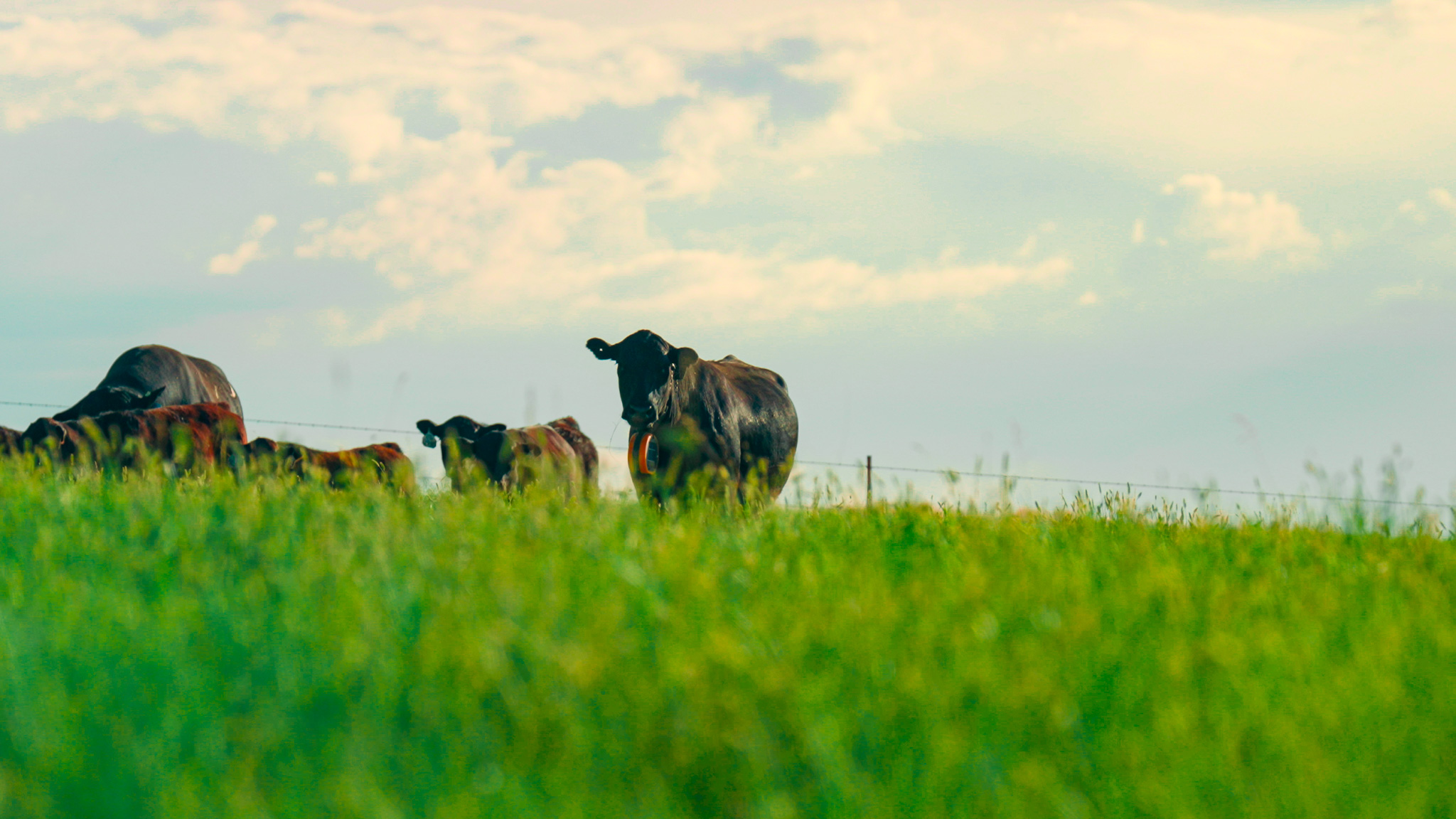
Of all five principles, this is the one that ties the rest together. Soil armor, minimal disturbance, living roots, and diversity all move a system in the right direction on their own, but leave livestock out of the picture and each of those principles gets harder to sustain. Bring livestock in, and the rest starts falling into place almost automatically.
The native prairie is the clearest example of why. That system sustained itself for thousands of years, and it didn't do that alone. The buffalo were part of it from the start, and without them, most researchers agree the prairie as we know it would have failed. Grazing animals cycled nutrients, introduced biology from the rumen, and kept that landscape functioning in a way no plant community could manage by itself. Cropland works under the same logic, whether it's set up that way or not.
Grazing a living plant versus grazing residue
There's a real difference between putting cattle on a living crop and putting them on dead residue, and both matter for different reasons.
When an animal grazes a growing plant, something happens below the surface. Saliva carries enzymes that send a chemical signal to the plant, telling it to push out more root growth to rebuild what was eaten. More root means more reach for nutrients, and more root also means a bigger home for the microbes and fungi living around it. That plant isn't just recovering. It's building infrastructure it wouldn't have built on its own.
Grazing residue works differently. There's no regrowth to stimulate, since there's nothing left standing. But the benefit is still real, because every time an animal drops manure and urine on that ground, degrading plant material gets cycled into a usable nutrient source much faster than if it had simply sat there breaking down through the winter.
The manure comparison
The real difference between manure and commercial fertilizer comes down to three forms.
Fresh manure, straight from the cow, is about as good as it gets. It's in its purest form, full of live biology, and it biodegrades quickly once it hits the ground. Uncomposted manure out of a feedlot is a step down. It's less uniform, carries some unwanted seed, and hasn't been refined at all. Composted manure trades away most of that live biology, since the heat of the composting process kills a lot of it off, but the tradeoff is a product that's easier to haul, easier to spread at a lower rate, and more predictable to work with because the water has been pulled out of it.
Commercial fertilizer still has its place, and most operations, this one included, use some. But it doesn't bring any of that living component with it, and it costs more besides.
What shows up in the ground
A few years back, a quarter section at Jorgensen Land & Cattle went a full season without anything harvested mechanically off of it. A full season cover crop was planted and steers were run on it instead. Going into that year, organic matter on that ground tested at 4.2 percent. After the cattle came off and the residue finished grazing out that fall, the same ground tested at almost 8 percent.
That's not a small shift. Organic matter at that level means more water holding capacity, a bigger microbial support system, and a nutrient cycle that keeps working harder year after year. That kind of change doesn't come from a bag of fertilizer. It comes from cattle, a cover crop, and time.