July 30, 2026
Principle Three: Maintaining a Living Root
By Bryan Jorgensen, Visionary - Ideal Soil Solutions
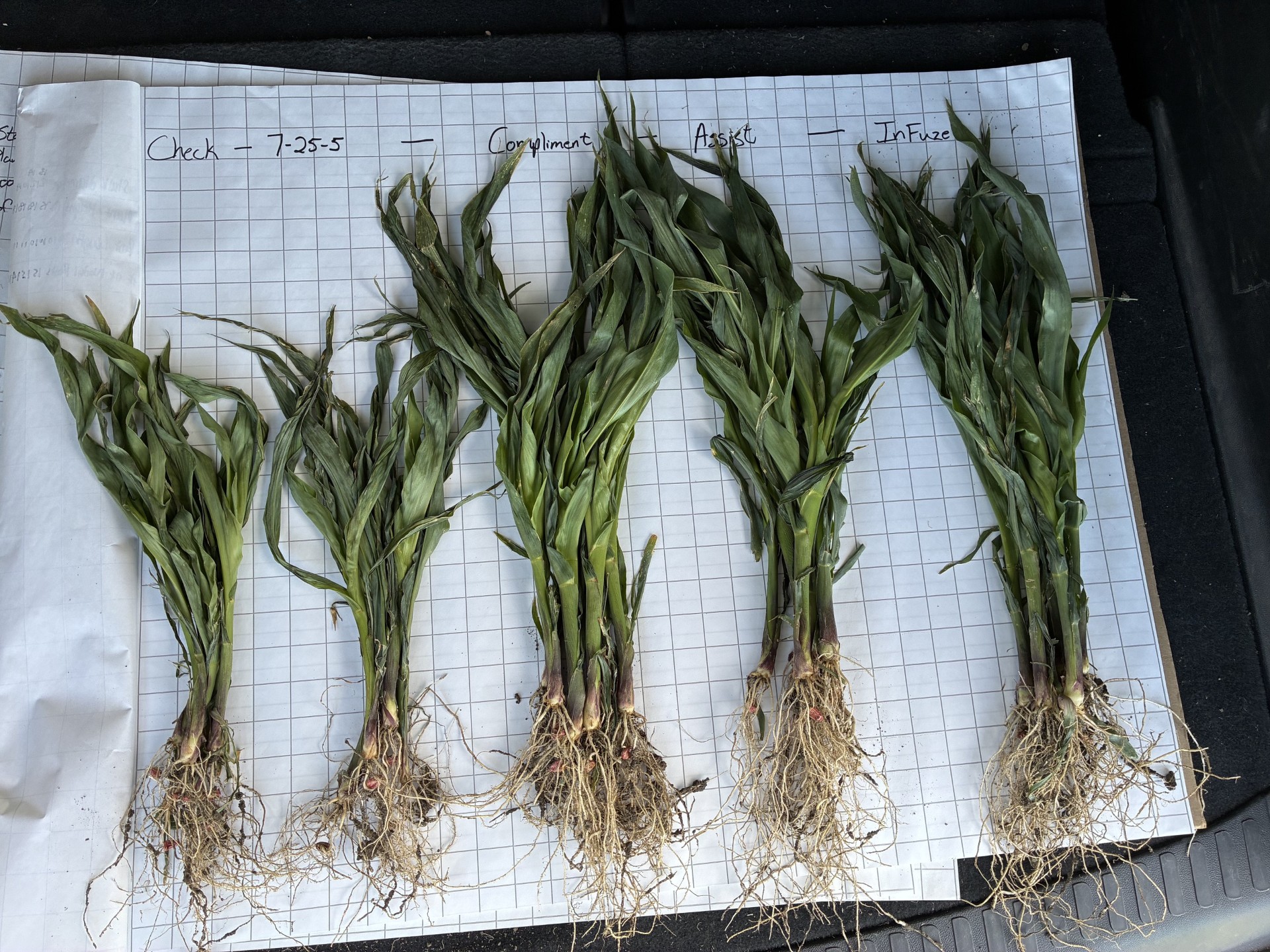
If organic matter is the fuel tank, a living root is the engine. It’s the thing that keeps trading, keeps transferring, keeps the whole system running while it’s in the ground.
Here’s how I think about it. The plant is really a sugar machine. Its job is to gather sunlight energy and run it through the most efficient process known to man, photosynthesis, turning sunlight, CO2, and water into carbohydrates and sugars. The plant pumps those sugars down into its roots, and the roots exude that material and trade it with the microbes living on and around them, in exchange for the nutrients the plant needs. The plant actually sends chemical signals telling the microbes exactly what it’s looking for. It’s an intricate system, and it’s constantly changing: constantly transferring, constantly exchanging, constantly providing a habitat for that biological community.
That root isn’t just there to anchor the plant or pull up water and nutrients. It’s exploring the soil for as far as it can reach, bartering sugars for nutrients, and building a home for the microbes that make the whole trade possible. The longer we can keep that system running in the soil, the livelier and healthier that soil becomes.
What we’re up against
A native prairie has a living root working 365 days a year. That’s the benchmark. Obviously we’re not growing perennial crops here, so we’re never going to hit that number. But if we can get nine to ten months of active root time in a given system, we’re doing a really good job.
Compare that to a straight corn soybean rotation, which is common across the Midwest. That root system is alive from about May to September, and that’s it. For roughly half the year, there’s no living root, no exchange, nothing happening in that soil. That’s a real problem: you’re not building organic matter, you’re drawing it down. You’re losing colonized habitat for microbes and fungi, and you’re continually working that system in the wrong direction.
What happens once the root is gone
Once an annual plant dies, the community it built around itself dies with it. The microbes are left without their supply of carbohydrates, so they turn to what’s around them instead, mainly organic matter, and start feeding on that. Without a living root, there’s no habitat left to sustain those microbes, so they start drawing down the reserves in the soil rather than adding to them.
There’s a structural cost too. The root has been acting as a natural stabilizer, holding soil in place against erosion, especially on slopes, even after the plant above it is dead. As that root decomposes, usually over about a year, the soil aggregate it was holding together starts to break down. The soil’s ability to take in air and water starts to diminish right along with it.
What good root health looks like
Take a spade out into a living crop and dig. You’re looking for roots that go down as deep as the spade will reach. If you find roots stopping and flattening out at three or four inches, that’s a compaction issue. Good roots smell rich and earthy, look bright and white, and are fibrous and full. Give the plant a shake and the soil should fall right off. If soil is clinging to the roots and compacted, that’s a signal something needs to change.
Even in the off season, with no living plant present, I still want to see that root structure holding the soil together the same way it does during the growing season.
The takeaway is simple: the fewer roots you have in the system, the more diminished it becomes. The more roots you have, the more robust it becomes.