July 30, 2026
Stretching the Living Root Window: How Our Rotation Is Built
By Bryan Jorgensen, Visionary - Ideal Soil Solutions
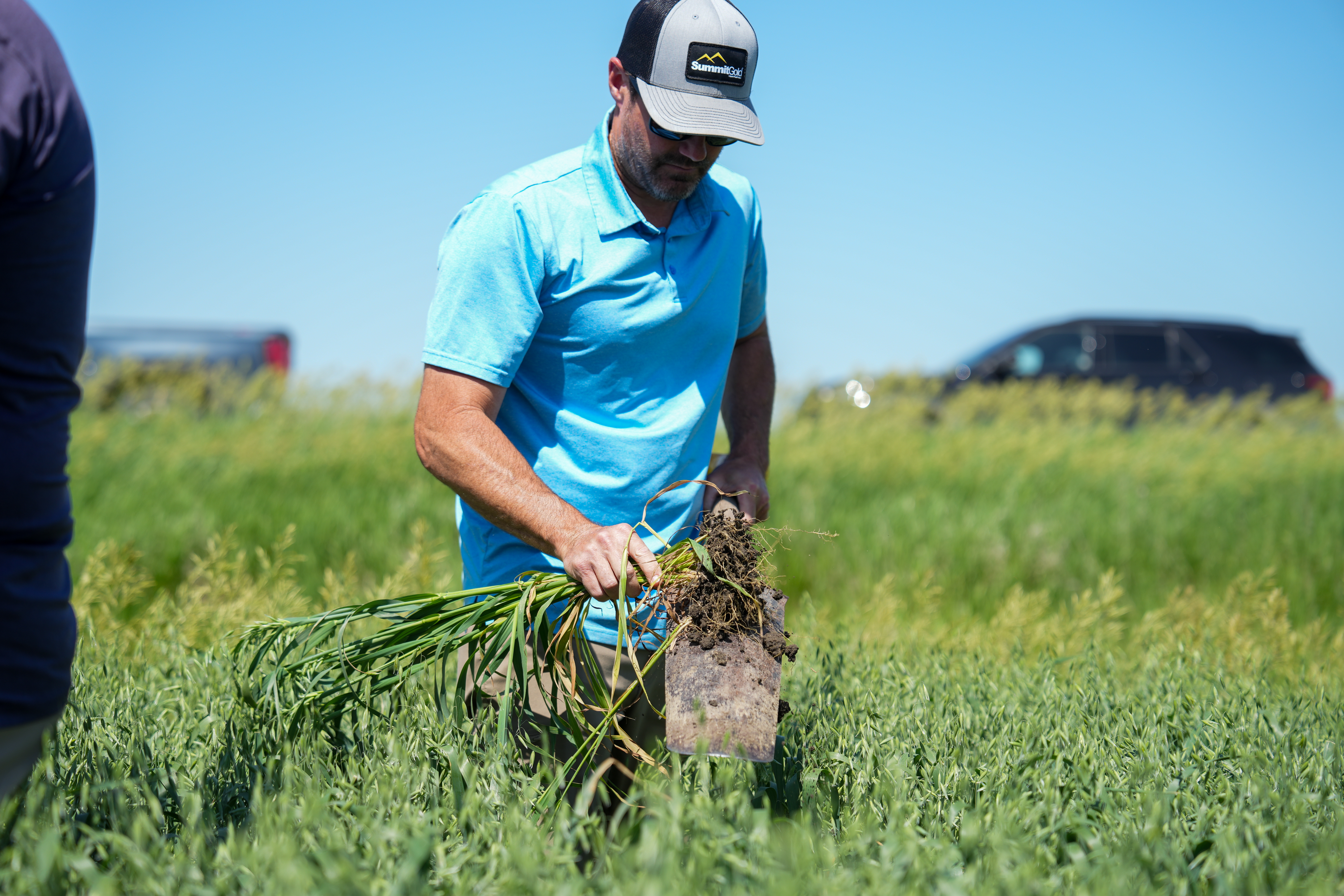
Once you understand why a living root matters, the next question is practical: how do you actually keep one in the ground for as much of the year as possible? For us, it comes down to timing, and to a rotation built deliberately around it.
Starting with winter wheat
Winter wheat goes into the ground in September and develops a root system right away. We maintain that active root system until late June or early July of the following year, so we’re getting eight to nine months out of that crop alone. As soon as harvest wraps up, we plant a cover crop into that stubble. It takes three to four weeks to establish, and it carries through until dormancy, sometime around November.
Add that up, and we’ve only got one or two months in that whole cycle without a living root in the ground. Short of a true perennial like alfalfa or grass, that’s about as good a model as we can build.
Corn silage as a second example
Corn silage gets planted in May, we harvest it, and by October there’s no living root left unless we act. So we immediately plant a cover crop behind it, hoping to catch some moisture to bring it up. That gets us a couple more months of root activity, stretching what would have been a six month window out to eight or nine.
Neither example gets us to twelve months. But both are a lot better than doing nothing, and they show the principle: look for every window a harvest creates, and fill it.
Why corn-soybean rotations make this so much harder
A tight corn-soybean rotation gives you a very narrow window after harvest to establish anything else. That’s part of why I consider that kind of rotation limiting: without a cereal grain somewhere in the mix, there’s rarely enough time left in the season to get a cover crop established before winter.
Bringing in cereal grains, like spring wheat, winter wheat, or oats, opens up those windows. Different crops have different planting and harvest windows, and stacking a variety of them means more opportunities, spread across the calendar, to slide a cover crop in behind something.
On the cost of cover crops
I know some producers look at a cover crop as a straight cost: an added expense for a crop they won’t harvest and sell. In our system, cover crops double as grazing, so we recapture that value directly. For producers without livestock, the return is less direct, but it’s still real: more organic matter, a longer living-root window, better soil structure over time. Whether that fully offsets the cost of planting depends on the operation, but the benefit compounds. It might not show up as a dollar figure that same season, but it will show up eventually.
Here’s how I actually make the call on our own ground: if we’ve got good subsoil moisture after wheat harvest and the ability to graze it, I’ll plant a cover crop nearly every time. If it’s dry and we don’t have the water or fencing to graze it, I usually skip it, because the odds of it establishing successfully drop fast. In our part of the country, we get a genuinely successful cover crop, meaning one that emerges, roots, and grows enough to provide armor and grazing, in roughly three out of five years. The farther east you go from us, the better those odds get.
Even in the years it doesn’t fully establish, leaving that dead root undisturbed still provides some benefit until the next crop goes in. Nothing is wasted, even in an off year.