July 30, 2026
What Stresses a Root System + What Idle Soil Really Costs
By Bryan Jorgensen, Visionary - Ideal Soil Solutions
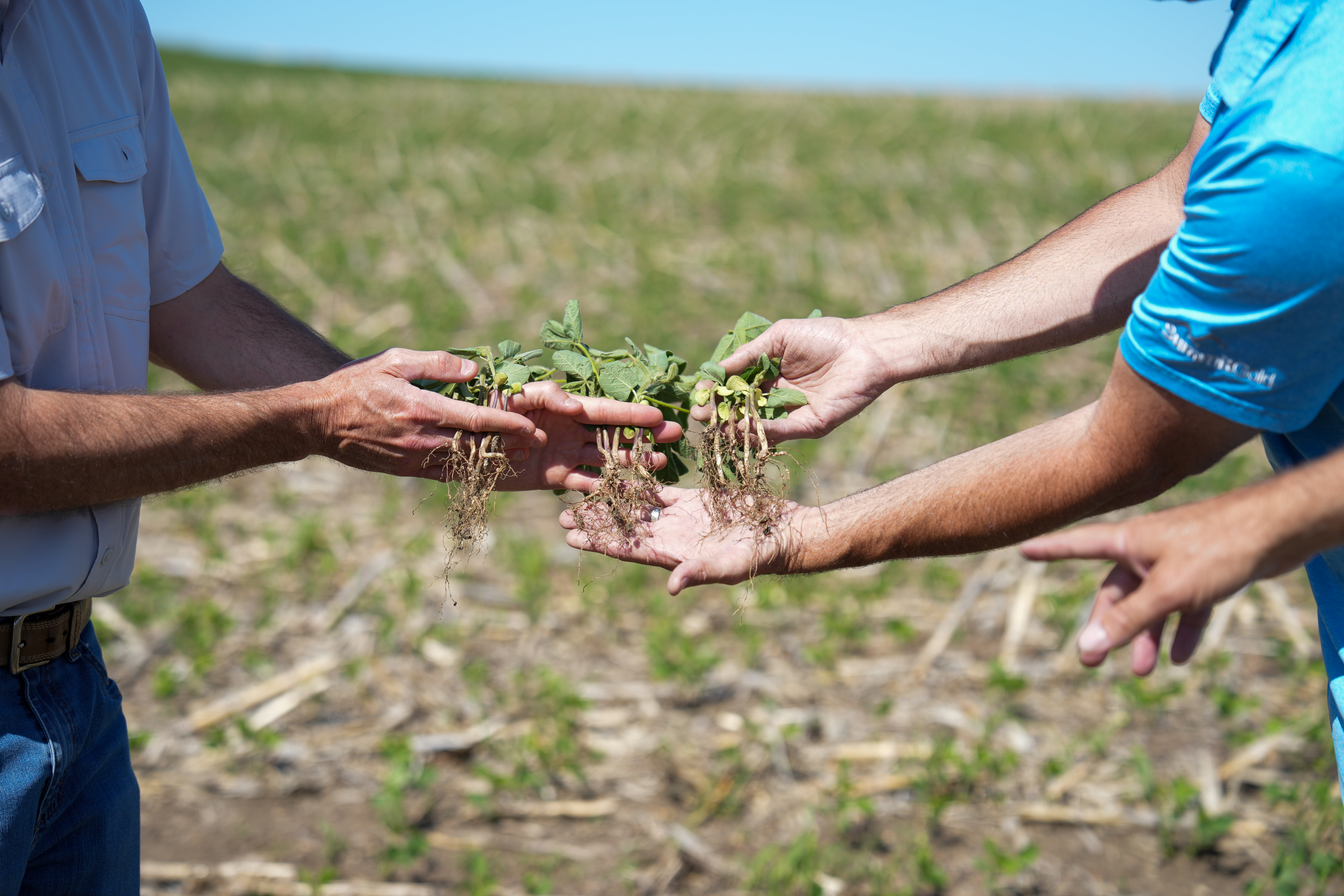
We spend a lot of time talking about what building a living root does for a soil system. It’s worth spending just as much time on what damages it, because most of it comes down to decisions we make without thinking twice.
The usual suspects
Compaction is the obvious one. Roots can push through a fair amount of resistance, but they don’t like fighting through soil compacted much beyond 300 to 350 pounds per square inch. Different root types handle it differently: fibrous roots, like grasses, send out thousands of fine hairs that work their way down; a taproot crop like a brassica sends one big, heavy root that can bust through compacted layers over time. Either way, there’s a limit to how much compaction a root can fight through on its own.
The bigger issue, in my experience, is herbicides. There are a number of root-restricting herbicides out there in common use that will prevent the next crop’s roots from developing the way they should. This is why crop planning has to include more than just the crop itself: we have to think about how that crop is managed chemically, because a herbicide choice made this season can work against us when we’re trying to establish the next root system.
Putting a number on idle soil
People ask me to put a dollar figure on what it costs to run soil without biological activity, without armor, without a living root. It’s hard to give an exact number, because there are too many variables. But I can tell you what happens: nutrient transfer efficiency drops off. Soil starts acting less like a living system and more like dirt, a medium you dump a plant and some nutrients into and hope for the best.
Take away armor, add heavy disturbance, and remove living roots from the equation, and you’ve built the beginnings of a desert. All of that can be healed by bringing those pieces back into play, one at a time. But looking at the fertility and tillage costs common in a lot of conventional operations today, we’re talking about hundreds of dollars an acre in unnecessary spend, not tens of dollars. In today’s economics, that’s the difference between an operation that carries into the next generation and one that doesn’t.
What to look for
Two tools tell you almost everything you need to know: a spade and a soil probe. Dig during a living crop and look for roots reaching as deep as your spade goes, bright, white, fibrous, smelling rich and earthy, with soil falling away easily when you shake the plant. If roots stop and flatten a few inches down, or soil clings to them in a compacted mass, you’ve found your problem area.
In the off season, with no living crop present, I still want to see that root structure holding the soil together the same way it would during the growing season. And when you take a probe to the ground, as long as there’s some moisture present, it should slide through cleanly.
Where root health fits in your priorities
If I were setting a 3-5 year plan and had already put good soil armor and low-disturbance practices in place, the next decision point would be roots: bringing in more crop types, adding cereals to the mix, considering perennial grasses where it makes sense, and generally breaking the monoculture cycle wherever possible. Nowhere in nature does a single species grow completely alone. Getting closer to that principle, whether through cover crops, double cropping, or co-mingling species, just takes a willingness to try something you haven’t tried before.