July 30, 2026
What Success Actually Looks Like: Organic Matter, Compaction, and the Payoff
By Bryan Jorgensen, Visionary - Ideal Soil Solutions
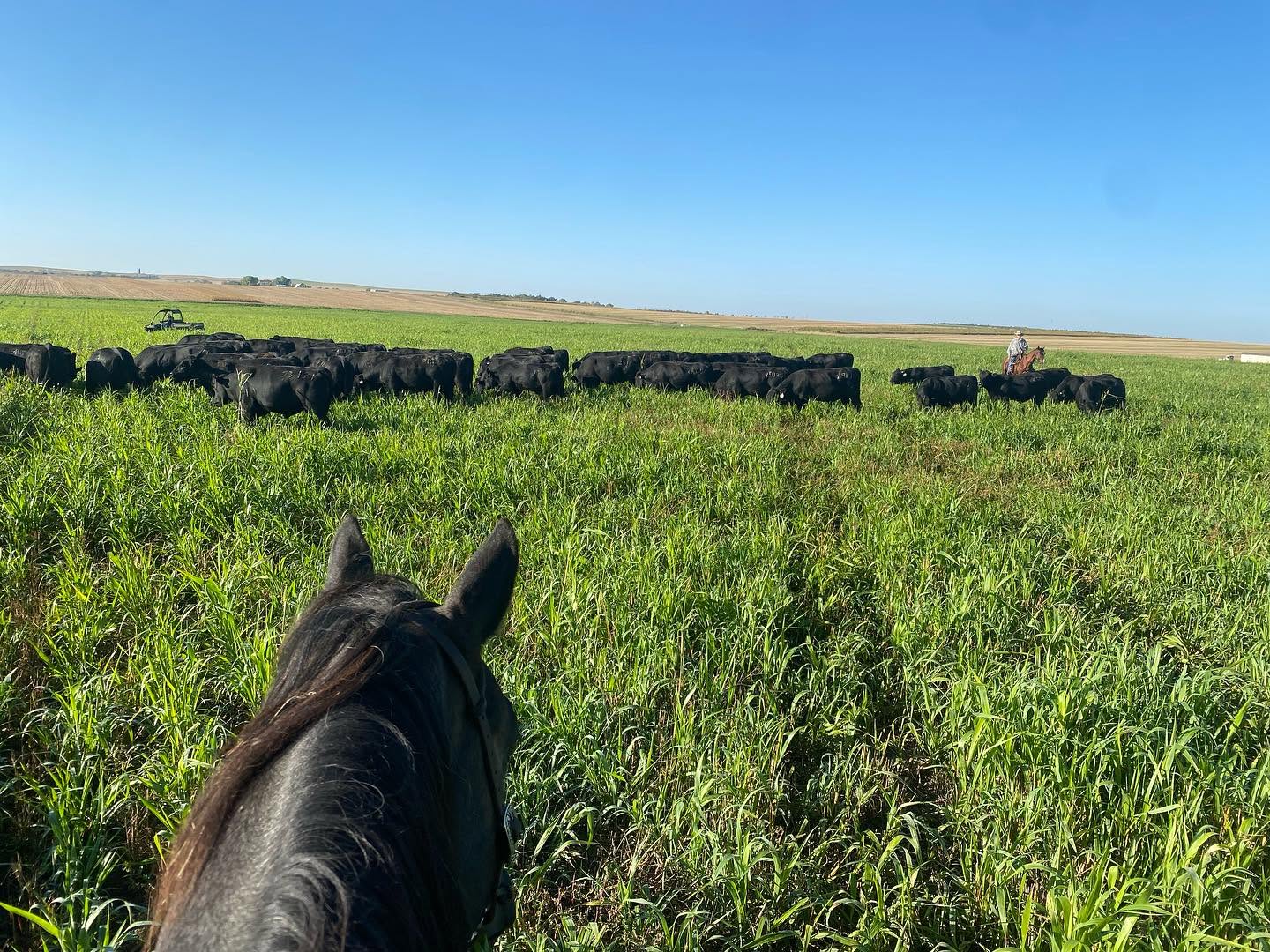
If soil armor and low disturbance are the “how,” organic matter is the “why it works.” I explain it to people this way: organic matter is the fuel tank on a race car. The bigger the tank, the longer the system runs. Organic matter is what feeds the microbial system in your soil: it’s the food source that fuels the exchange happening between plant roots and microbes, where the plant trades carbon and carbohydrates from photosynthesis for the nutrients it needs. The higher your organic matter, the more microbial and fungal life your soil can support, and the more robust and efficient the whole system becomes, as long as it’s balanced.
Here’s a number worth knowing: 85% of a plant’s biological activity happens in the top three inches of soil. That’s exactly the layer that gets burned up fastest by tillage, and it’s the layer soil armor is protecting. Your rotation, how you harvest, how much carbon you remove, and how heavily you graze all directly affect organic matter in that top layer.
Can soil heal itself?
To a point, yes. Nature doesn’t want bare soil: the first thing that shows up on exposed ground is a weed, because nature wants a living root in the system no matter what. Left alone long enough, bare or overgrazed ground will eventually transition from weeds to grass, usually an unwanted perennial that doesn’t do much good on its own. Managed correctly, including bringing livestock back into the system, that recovery happens much faster. I’ve seen people bring vegetation back into genuinely desert conditions using livestock and these same principles.
The hardest disturbance to notice
If you ask me what disturbance does the most long-term damage while going almost completely unnoticed, it’s compaction. Our equipment isn’t getting smaller: it’s getting bigger and heavier every year, and roughly 85% of our acres go to a feed crop, which means a lot of traffic across those fields. Compaction compresses the oxygen out of the soil colloid, and that’s a much bigger deal than most people give it credit for.
Disturbance isn’t just physical, either. It’s chemical: herbicides and fertilizers. It’s how we harvest. It’s how long we leave livestock in one place, or how little residue we leave behind. Every activity creates some kind of disturbance. The job isn’t to eliminate disturbance entirely; it’s to figure out which disturbances are necessary and minimize the damage from the rest.
And to be clear, some disturbance is a net positive. Hoof impact from grazing cattle on healthy ground is a good example: as long as the system is already balanced and organic matter is up, that ground can absorb more disturbance and come out ahead. Grazing cycles nutrients and adds biology back to the system, which offsets some of the compaction that comes with it. It’s a balance, not a binary.
What you’ll actually see, and when
If someone commits to this approach, here’s the honest timeline. In the first couple of years, start with a soil test and get a real read on your chemical and physical imbalances, base saturation, pH, organic matter levels. From there, the next step is reduced or no tillage, more diversity in the rotation, and seriously considering livestock integration, even if that just means letting someone else graze a cover crop on your ground.
Three or four years in, if you’re doing this right, you’ll start seeing real changes. By five years, here’s what success looks like to me: you take a spade or a probe into that soil, and it drives down into the ground unrestricted. What comes up looks like chocolate cake, dark, crumbly, alive, and it smells good. Visually, the crop across the field is thriving and uniform. You see insects, you hear birds, you see beneficial insects doing their job on the pests. Walk into a healthy pasture and you’ll see the same signs.
On the numbers side: organic matter increases, base saturation starts moving back toward where nature intended it, pH may shift slightly. Physically, you’ll see more residue on the surface, more armor, more resilience in the crop, and more uniformity across different soil types in the same field. In a good year, you may see meaningful yield increases. In a dry, tough year, you’ll see less yield loss than you would have otherwise. That resilience is the real signal. It gets more noticeable every year as the system moves closer to balance, and it compounds: more production with less input, year over year.
What it means for the bottom line
From an equipment standpoint, a well-set-up system needs a planter, a sprayer, and a harvester: no custom applicator, no separate dry fertilizer spreading. Properly set up, your planting and fertility work happens in one pass, and a balanced rotation usually only needs one or two spray passes per crop. That’s five or six total passes across a field for the season. Custom application rates run $10 to $40 an acre, so cutting unnecessary passes adds up fast. Cut your fertility needs by 30 to 70 percent, and on $100–$250-an-acre fertility spend, that’s real money. Cut labor tied to tillage and separate applications, and that’s a real number too. We run about six-tenths of a gallon to just over a gallon of fuel per acre on any given pass; if we were still tilling, that number would be four or five times higher.
Lower costs, better return on investment, and healthier soil aren’t three separate wins. They’re the same outcome, showing up in three different places.
That’s the foundation: soil armor and low disturbance, working together, backed by organic matter doing the heavy lifting underneath.